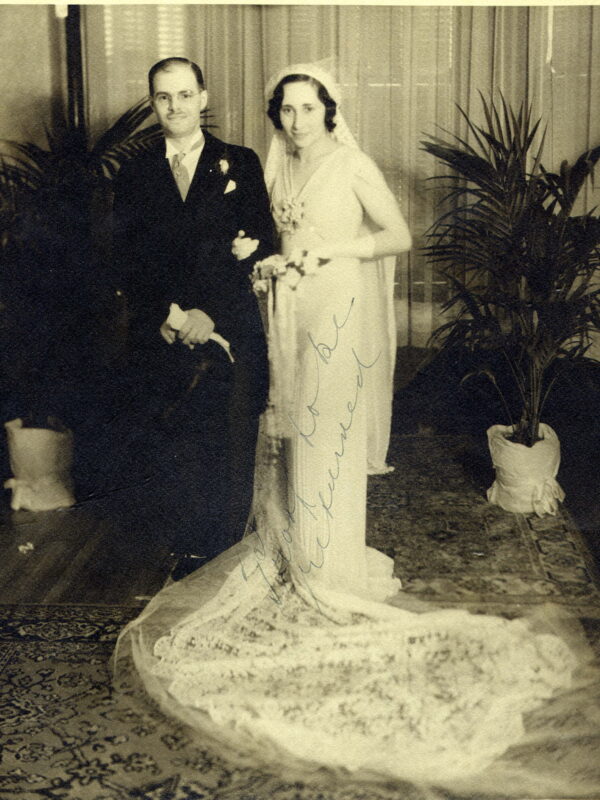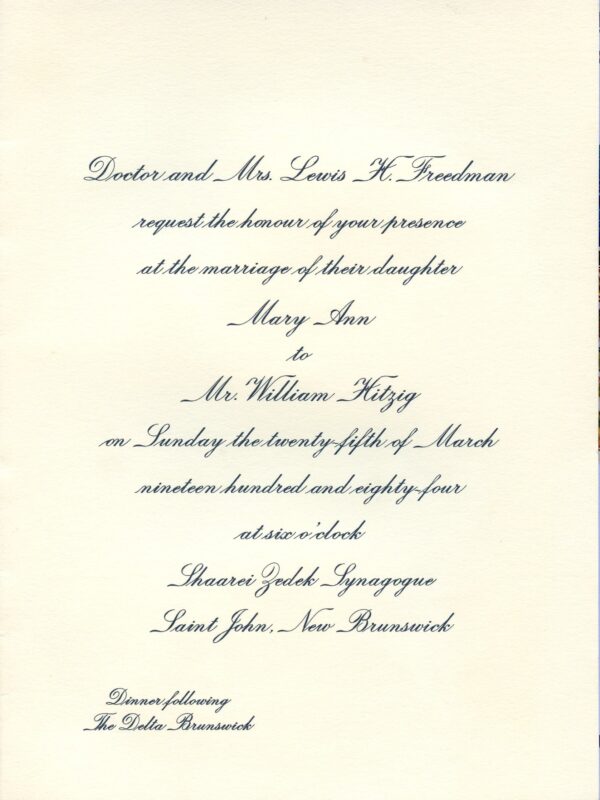



The Museum has a wonderful collection of wedding dresses, photographs, artifacts, documents and memorabilia to recall decades of wedding celebrations in Saint John.
A Jewish wedding takes place under a canopy supported at the four corners to represent the new home the bride and groom will have. Someone stands at each corner to hold the canopy. At the beginning of the ceremony, the parents of both parties escort their children to the chuppah, first the groom and then the bride. This procession can be accompanied by music and singing. Once under the chuppah, the bride circles the groom seven times as a prelude to the ceremony. This represents that any barriers between them have fallen (based on the falling of the walls of Jericho) and they will be united.
The ceremony itself is quite brief and includes seven blessings for the bride and groom and for the Jewish community. The ceremony ends with the groom breaking a glass under his foot – this is a reminder that even though this is the happiest day of their lives, they also remember all of the tragedy and hardship of Jewish history.
The bride and groom and their witnesses sign a marriage contract called a kethubah which spells out their obligations to each other within the marriage. They also sign the marriage licence issued by the province.
Although there are many differences in Jewish culture, Jewish brides and grooms dress in the same way as couples from other faiths. The one addition to the wardrobe is the kipah for the men. White is the traditional colour, but other colours can also be chosen to match the colours chosen by the bride. Brides generally carry a small white covered Bible which would be a gift from family or friends, along with flowers.
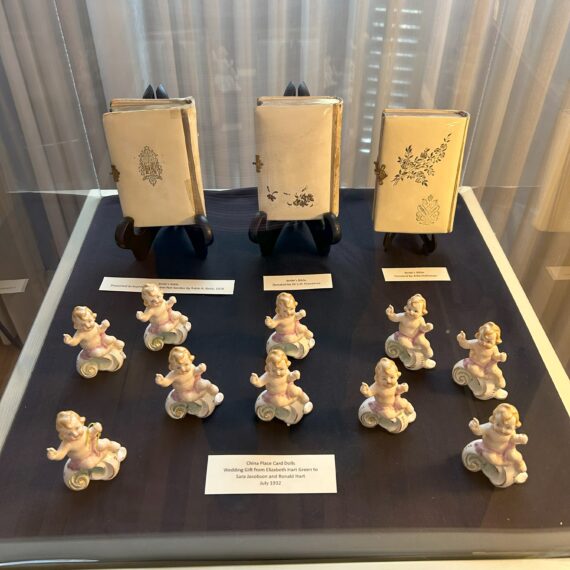
The wedding is followed by a meal and perhaps dancing. In Saint John, the Synagogue and the Admiral Beatty Hotel were the most popular venues for these events. The day concludes with the happy couple leaving for their honeymoon.
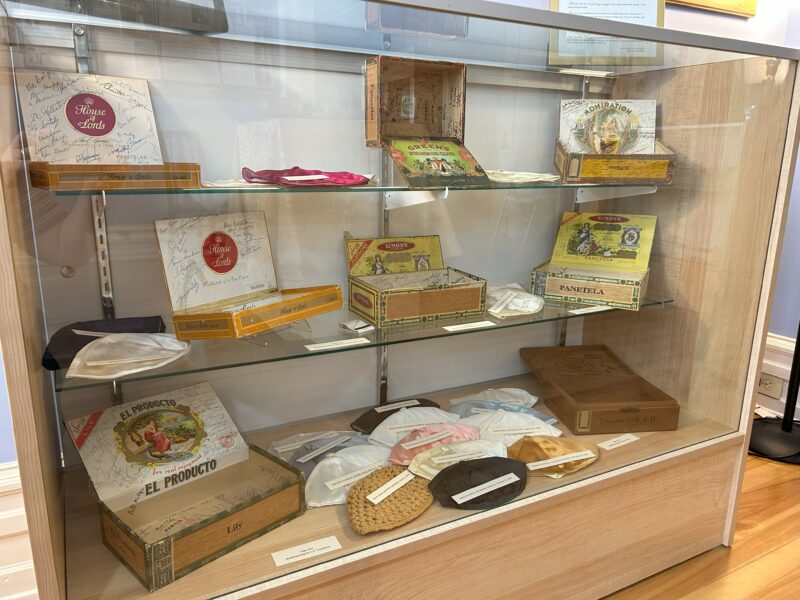
The presentation of a cigar box to the groom was a tradition in Saint John. The men of the community would gather for the stag party and share a box of cigars. Once the box was emptied, it was passed around again, this time for the guests to sign and present to the groom as a souvenir.
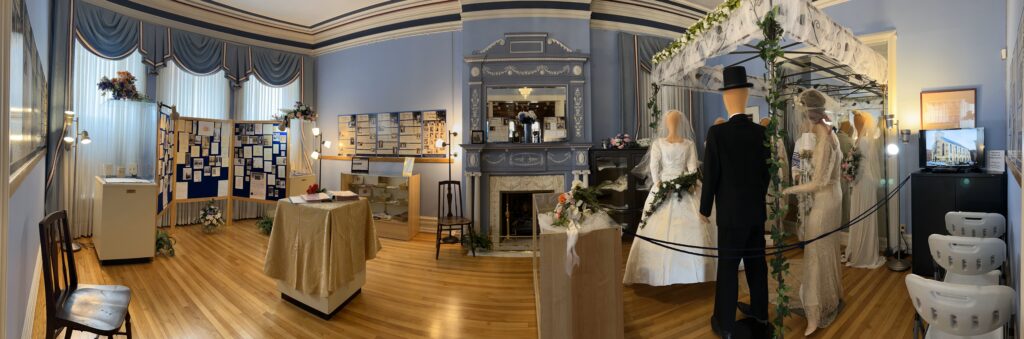
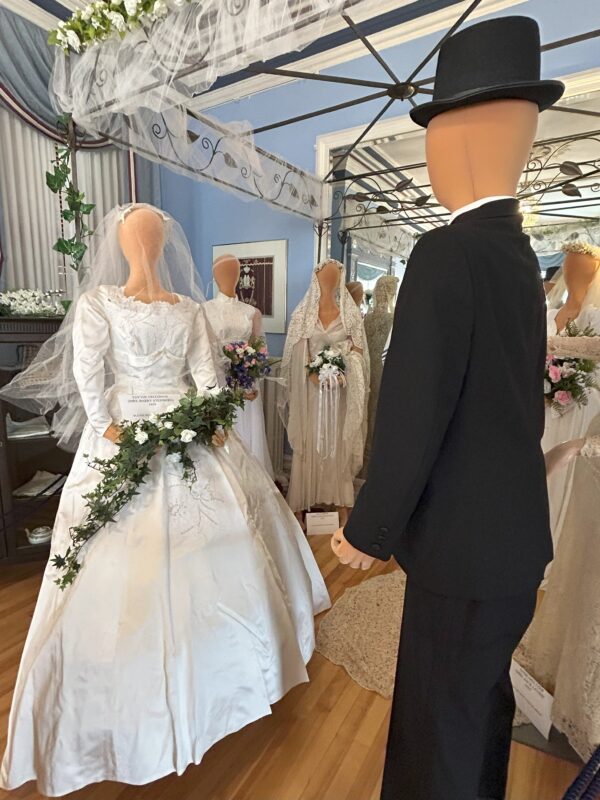
The Museum has displayed five wedding dresses from its collections alongside Bride’s Bibles, cigar boxes from the stag parties, dozens of photographs and invitations. A compilation of more than 150 wedding and shower notices from the Saint John newspapers has been gathered for those interested in exploring more deeply.