


The recording of oral interviews with community members in the 1980s was an important means of learning and preserving stories about families, organizations and community life. Their words are a reminder of the lessons taught in Jewish homes and the spirit that filled the Jewish community in former days.
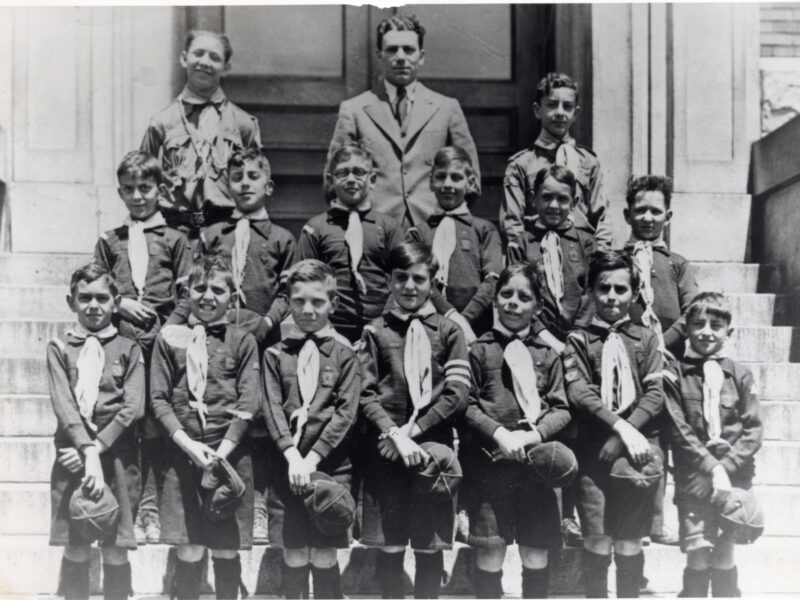
The Judaean Scouts started in 1924, we were known as the 13th Saint John Judean Scouts. I think we picked that number ourselves because we thought it would bring good luck and it certainly was good luck because our Scout troop flourished for years. Eli Boyaner was the first Scout Master. There were so many boys present at that time that we had to make two troops. Norman Smith was made Scout Master of the second Troop. As time went on, the older boys gradually left for college and we had one good strong troop under the leadership of Eli Boyaner. Among the leaders at different points of time were Norman Smith, Maurice Elman, Ralph Isaacs, Ben Guss and the late Joseph Guss.
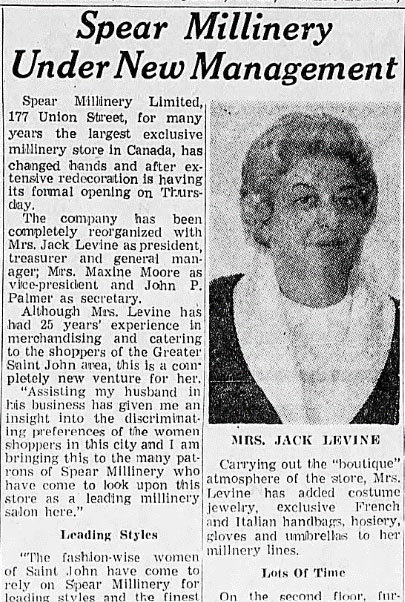
[In 1961, her son Ellis, suggested she buy the Spear Millinery Store at 177 Union Street.]
One day, Ellis comes over, he says, would you like to own your own business? There’s this store across the street. It’s for sale. It’s the Spear Millinery. He says, I have an option on it for you. … I said OK. I had to buy in less than 24 hours, I bought lock, stock and barrel. … I ran a sale. Anyway, I bought the store and I ran a sale. I felt that that was the end of it, I wouldn’t do anymore. When I said, oh, I think I’ll carry on. I knew nothing about hats so I know nothing about it. So, and the store was in terrible condition. So I said to Jack [her husband], I don’t know anything about colours. I don’t know anything. He says we’ll bring in an interior decorator, from Toronto. And we’ll clean the store up. And I’m going to take courses in millinery. So that’s what we did.
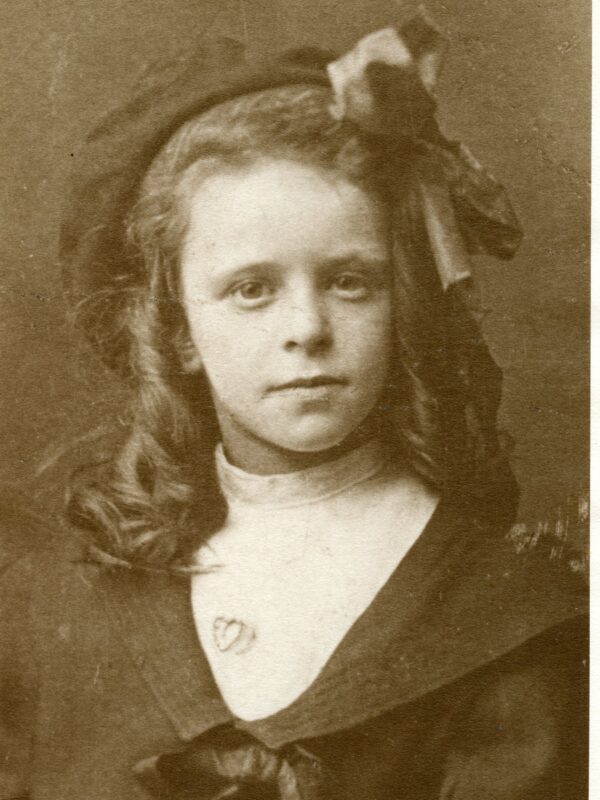
I’m trying to figure out how old I was… when we got the first telephone. … Well, we started to get a little rich. We were able to have a telephone. And you can imagine, Papa, Mama, trying, you know, with six children. And, we got the telephone in because, Uncle Abe [Poyas], who had a jewelry store, on Mill Street, he thought we should have one. He was a darling, very sweet. Anyway, when the telephone came, Frank was very excited. Frank was two years older than me. And so, I may have been seven, six. Something like that. Seven or eight, I don’t know. But maybe you can gather from what I’m about to say. So, after the man left and it was there… Uncle Abe, he was a little richer than, we were at that time. And, he wanted us to phone him! You know, anyway. After we phoned him, he spoke to mom, then Frank said, “Bertie, let’s talk on the telephone.” So, I said “How?”. So, he said, “I’ll go over to Uncle Abe, and I’ll phone here.” I can’t imagine, how he knew the number. “And the phone’ll ring, you pick it up”. And I said, “ Well, what’ll we do, what’ll I say? So, he said, “Well, we’ll see!”.
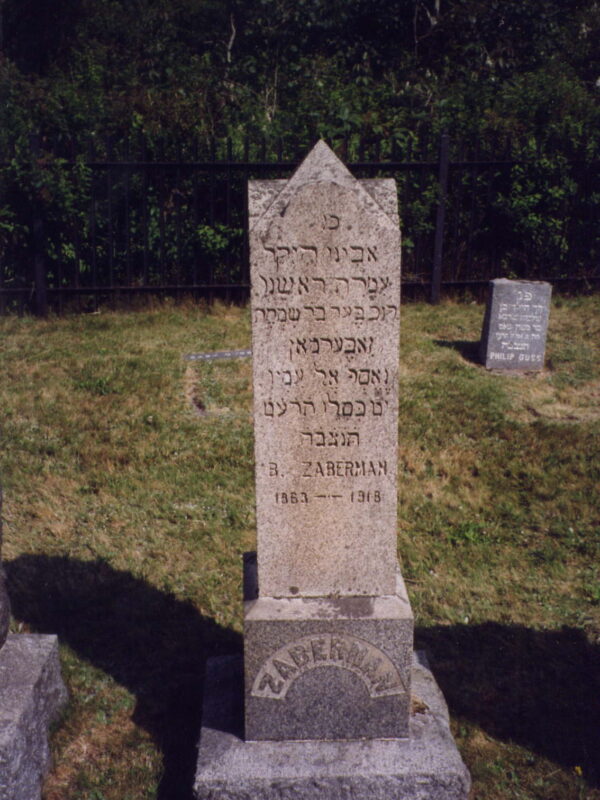
I came to Canada about 1909, [my father] would have come about 1907, I would guess. He worked in Saint John for maybe 6, 7, or 8 or 9 months, and then brought the family over. In order to bring them over he had to take the job as a shammes [caretaker or custodian for a synagogue] in the shul because they needed a shammes who could read the bulletin and handle that and he had to have money to show that the family weren’t paupers. So, you had to have like $200 a person. Whatever it was, the synagogue put it up for him to get them over. And he stayed on. That’s right, he died as a shammes.
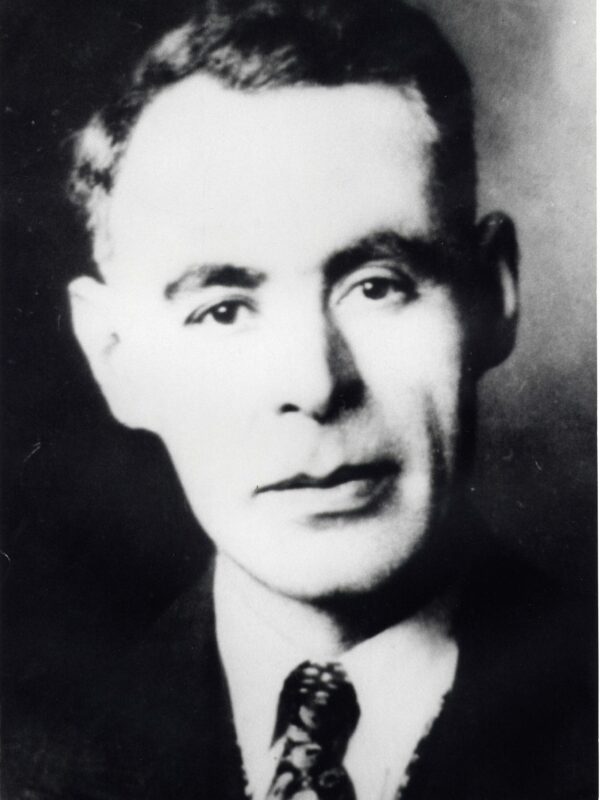
[Her father, Aaron Gold, opened a clothing factory in Saint John in the 1920s.]
My father decided to go into business for himself. He had been working for one of the factories there. And he opened up with one machine, and it increased to two machines and so forth and then he opened a factory on, we were on Waterloo Street first, and then the second factory was opened on Union Street. … In those days we manufactured mostly working clothes, lumbermen’s clothing and then Eaton’s propositioned him to open up a larger place and they would give him exclusive rights to manufacture for their stores. And so, we moved and bought the building on Canterbury Street. I don’t remember what year, that I don’t remember. It was before I started working for him. And unfortunately, Eaton’s after decided, they opened their own factory on the same street and then the Depression came along so it was quite a tight rope there. And I started right after school High School. I went and took a business course.
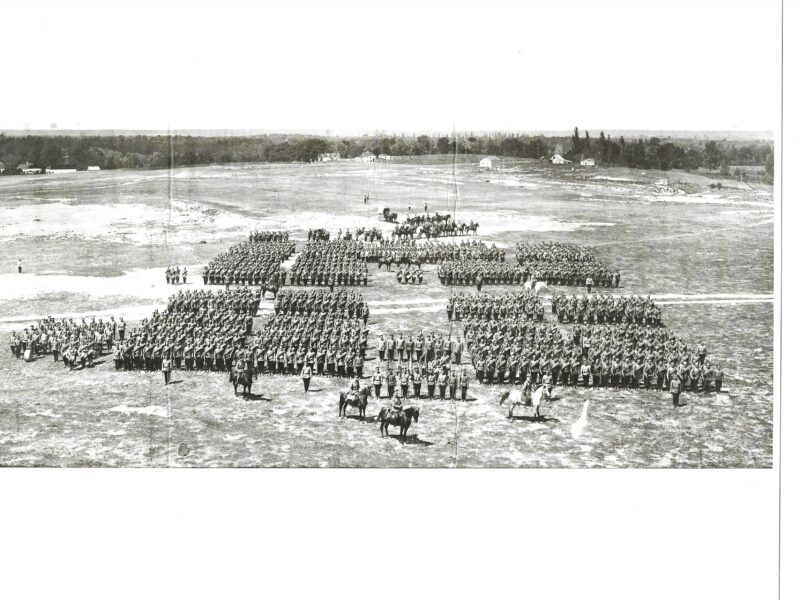
It is a photo taken by a Jewish photographer on a 60-foot tower in June 1910 at a military camp at Kiev. … The picture represents some harsh times as part of life in Russia. Abraham Rozovsky’s compulsory military service lasted for three years, from 1909 to 1912. He had to leave his young wife (Zelda, my mother), myself at age 2 and Zelda’s ailing mother. My mother worked in a tailoring factory during those years, and of course, I knew no father until his return, and the beginning of child memories.
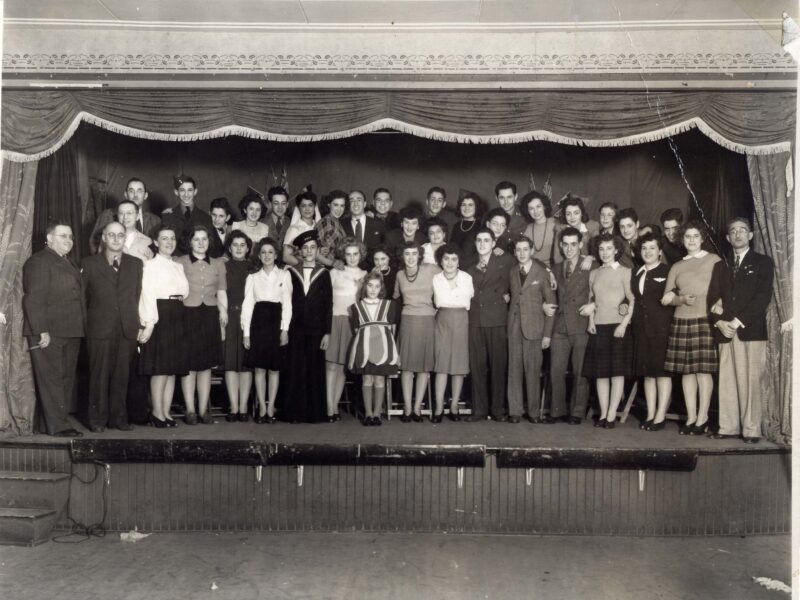
I was one of the stars of the show and when I got to sing, they all clapped and cheered. The late Mitchell Bernstein used to direct our shows. Also, Hymie Marcus directed our shows. And Benny Goldstein used to play the piano under pressure, but he always managed to come. Ahh, there were so many songs that it’s hard just to remember an outstanding one. I remember I used to sing a song to Pearlie Kashetsky –
In a little Spanish town, ‘twas on a night like this, the stars were peek a booing down, ‘twas on a night like this, I whispered be true to me and she said si,si” and so on.
I started in the film business in 1936 with Mitch Bernstein and Joe Lieberman. Well, I started the film business in ‘36. And Mitch Bernstein, Joe Lieberman, and that’s who I started to work with. Abe Smith was here then. Sam Jacobs, I think was here then, who else was here at that time? … Well, of course Joe Franklin was in the theatre business at that time. Mitch was young, of course. That was before Sam Babb’s time. No. The first one that I remember coming in to the city after 1936 was Charlie Chaplin.
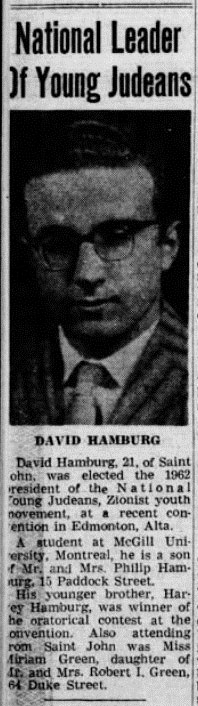
We were really active. I mean we were always in Cubs and Scouts and all that but we were really active in Young Judaea and it was, I don’t know, the height of the Young Judaea movement here but it was a really powerful youth group that all of us belonged and we kind of prided ourselves in moving up the ladder and taking leadership roles. All of us at one time were presidents of Saint John Young Judaea and at another point in our Young Judaean history my brother Harvey was president of Saint John Young Judaea, I was president of Maritime Young Judaea and my brother David was president of Canadian Young Judaea.