


This exhibit celebrates the lives, struggles, and triumphs of Saint John’s Jewish community as told by its members. Through personal stories, historical photographs, and poignant reflections, discover the rich tapestry of experiences that have shaped this community. From immigrants seeking new beginnings to entrepreneurs building businesses, and from tales of overcoming adversity to heartfelt memories of family and faith, these narratives paint a vivid picture of resilience and unity. Experience the humor, nostalgia, and humanity of voices spanning generations, capturing the essence of what it means to belong in Saint John.
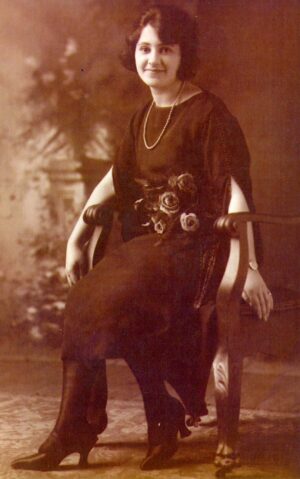
“[My parents, Lazar and Chia Bloom] were already married, but they didn’t come here directly from Dorbyan. They came from Harrisburg, Pennsylvania. My father was married in Dorbyan, and he had brothers who preceded him, and they were living in Harrisburg, Pennsylvania. So, he left Dorbyan, and he came to Harrisburg, Pennsylvania alone. Left my mother behind, and he started peddling with his brothers, and so he learned a little bit of the language and I believe he was there, oh I believe he was there probably about a year or more. And he went back to Dorbyan… “
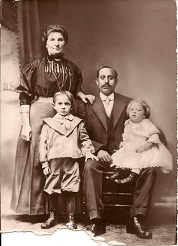
“I went to public school in Saint John. I went to Dufferin School, that’s where I think most of the Jewish children in the North End went to public school up to grade six, I believe. And then … then we transferred over to King George School out in Douglas Avenue for grade seven and eight. And after grade eight I went to Saint John High School. We were the first grade nine class to enter Saint John High School, the new Saint John High School, and it was then on Prince William Street. We were the first class of grade nine. We graduated from high school, and that was about ‘36, I believe 1936, and I went to work for a late uncle of mine, Barney Jacobson, who had a family clothing store on Main Street. And that was for the princely sum of five dollars a week which was lots of money in those [days]. … “
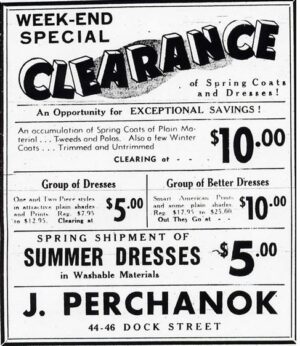
“I left high school and then I went to Vocational School for a half a year and then I worked at Perchanok’s. Perchanok’s had the dress shop. …they were still on Dock Street … and I used to come after school and deliver the parcels, the dresses and so forth. I worked at that and then in 1929 I went to work at Vassie, Brock, Manchester on King Street, the wholesalers. My father got me a job there, the only Jew, the one and only Jew that ever worked there, and I started out in 1929 at four dollars a week which was a big salary in those days. …”
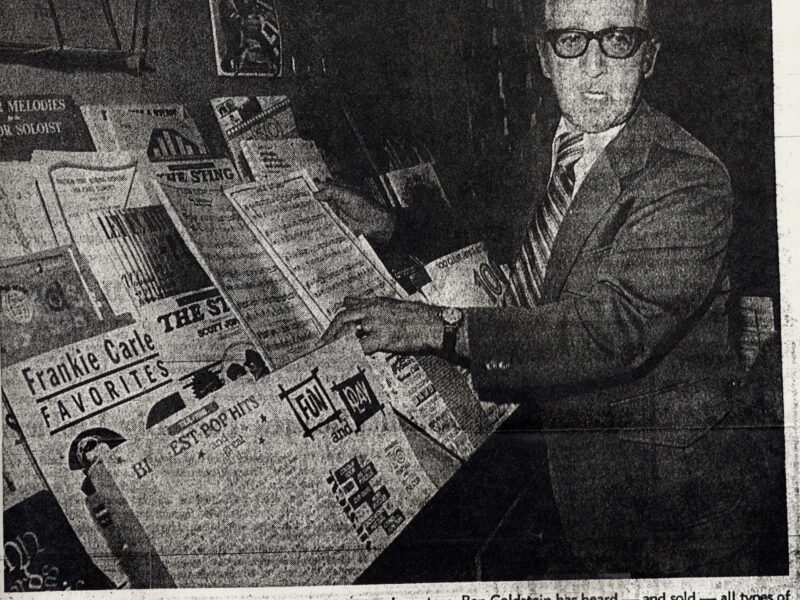
“I was in business over forty-three years and when I quit. It was 1975 when I quit. Subtract 43 from that, would be what, 1932. That’s more like it. I went into business because when I was taking lessons from [Mose Ewing] I used to order music from Roxie Bond, who had Roxie’s. Originally, he was with Townsend Company on King Street, you see. They had a store where SMT was. The service used to be very, very bad but when he moved up to Charlotte Street, I used to go to him. The service wasn’t any better. You’d order a piece of music and you could wait months, one month, two months, three months before you could get it. I said to Ida one day, I said, I think I’m going to go into the music business, retail. … “
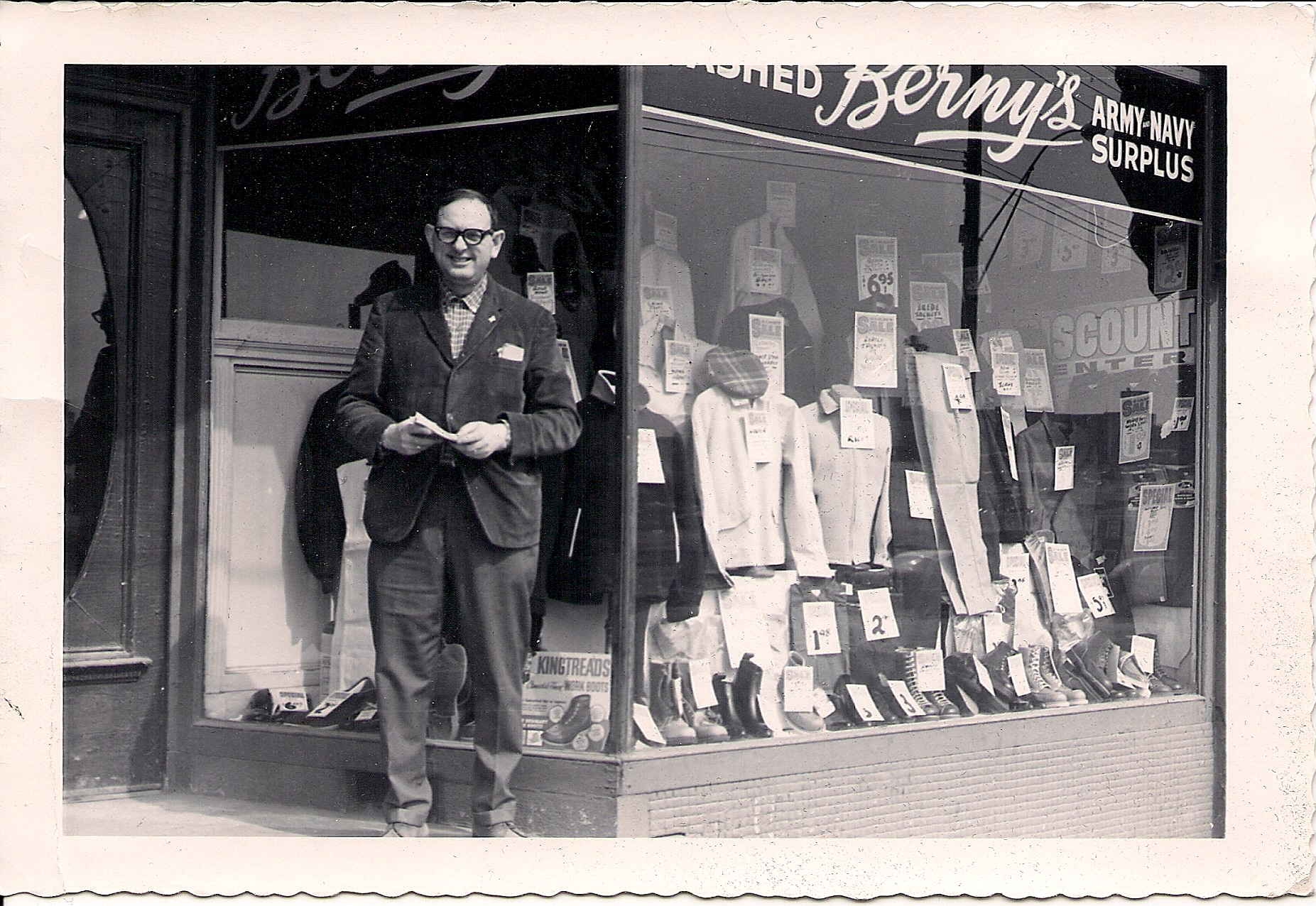
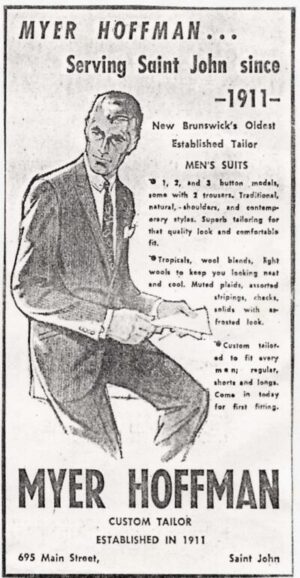
“I grew up in an exceptionally fine environment where principles and honesty were of prime importance.I remember I worked at my father’s, or both Myer’s and my father’s store for many years and used to take care of the pay books and send out a statement, which was almost a dirty word to my father, to send out a bill to anyone. And many people who purchased suits would never ask the price. And as I became older, I could show my father that for the fee he was getting for a suit, he wasn’t paying even the rent. I changed the ledger on an individual’s account and raised the price of each suit by $10 and sent the bill out. And the check came in for two suits, so it was a difference of $20. My father happened to see the cheque and knew it was more than it should have been. … “
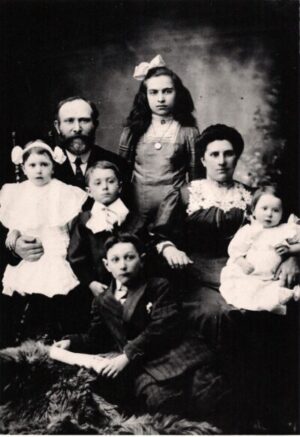
“On Saturday, like on Friday, my father used to come home, he’d rush home, so he’d be home at, he’d try to be home by about 4 o’clock. He had to get, he only had to get the fire ready, you know. with the coal and everything, and he’d get ready for Shabbos. Course my mother, she had the floors all scrubbed with newspapers all over the floors. … It was really and truly a very important day…”
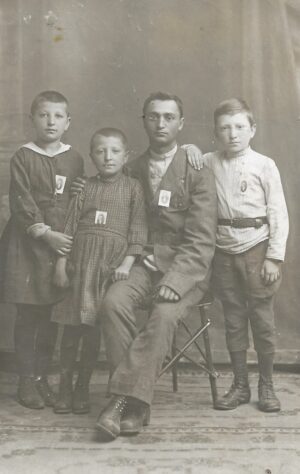
“I was seven, my … two older brothers, were on the road making a living you know, even after our parents died, and they, and my brother in Israel told me this after I went back to Israel to find out what it was all about. He said to me that the family wanted us—when they decided to collect these children and bring them here, these boys were approached for the three of us to go to America and the family said, “send them”, and they didn’t want to. So, my brother says he went to a rabbi and asked him what he should do. He went three times; the rabbi wouldn’t give him an answer. … Anyway, I said I was the youngest, I said I want to go… “
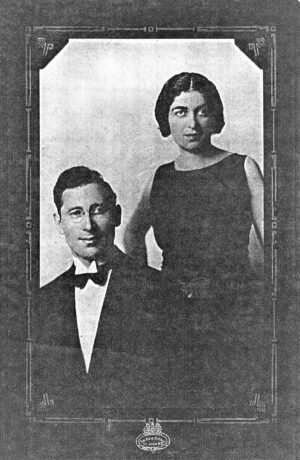
“I went to New York. I took up nursing. But unfortunately, my nursing didn’t materialize. I got rheumatic fever and I had to give it up because in those days they didn’t have any medication for it. … if you take enough of this, it will [make] your ears ring and you might get rid of that rheumatic fever and I was able to take large doses. Aspirin. Large, large, large doses of aspirin. … Fortunately I was cured. … I went to the Beth Israel Hospital in New York… Oh and Myer, that foolish Myer, he goes and fells in love with me.”
“… when immigrants came they were welcomed royally. And I remember very vividly and, of course, this was many years later when what we called the girls came. They were relatives of the Rozovskys. They came. That was after the First World War. The Leonoffs, that was. Mr. and Mrs. Leonoff. I think they had one child and they had a mother and Mr. Leonoff had two sisters and when they arrived in Saint John it was discovered they had tuberculosis. Now this was just a sample of the feeling of the people in Saint John. These two girls were put in the Saint John Tuberculosis Hospital and the Daughters of Israel supported them and I can’t remember exactly how long they were there but Jenny Harris was the president and I remember going with her so many times. Sometimes on the street car to the East Saint John Hospital, taking little treats and so, therefore, in order to support these girls in the hospital, there was a social event practically every week to raise funds. “